Buying a home is one of the biggest decisions you will make, so it’s only natural to ask: Are new construction homes a good investment?
For many homebuyers, especially those taking that pivotal step into a higher-tier home or community, the answer is a resounding yes. But the value of a newly constructed home goes well beyond square footage and modern finishes. It’s about what that home makes possible for you and your family today, and for years to come.
Here’s what to consider when weighing the long-term value of new construction and what to look for in a community that makes that investment worthwhile.
What Makes a New Construction Home a Good Investment?
Investment value in any home comes down to a few core factors: the quality of construction, the location, the costs associated with ownership over time, and how well it supports your lifestyle. New construction tends to perform well across all four. Here’s why.
Modern Design That Holds Up Over Time
Older homes were built for how people lived decades ago. Today’s new construction is designed around how people actually live now, and that alignment has real staying power.
Open-concept layouts, volume ceilings, flexible floor plans, dedicated home office spaces, and integrated technology aren’t trends likely to fall out of favor. They reflect a fundamental shift in how families use their homes that builders have responded to directly. A home that functions well for modern life tends to remain desirable—and desirability is one of the most durable drivers of long-term value.
What to look for: Floor plans with flexibility built in—rooms that can serve multiple purposes over time, main-floor bedroom options for multigenerational living, and layouts that don’t feel rigidly designed for a single stage of life. The more adaptable the home, the more useful it remains as your needs change. At Travisso, browsing available homes is a practical way to see how different layouts handle this kind of flexibility in real life.
Lower and More Predictable Maintenance Costs
One of the most underappreciated advantages of buying new is what you don’t spend in the early years of ownership.
With a resale home, deferred maintenance is often invisible until it isn’t—aging roofs, outdated HVAC systems, older plumbing and electrical, and appliances all on borrowed time. These costs can add up quickly and unpredictably, quietly eroding the financial advantage of a lower purchase price.
With a newly constructed house, everything starts fresh. Systems are new, materials meet current building codes, and most builders include warranties that cover structural components and major systems for defined periods after closing. That combination of new construction and builder-backed protection gives buyers a clearer picture of what ownership will actually cost, particularly in those critical first five years.
What to look for: Understand exactly what your builder’s warranty covers and for how long. Structural warranties, systems warranties (HVAC, plumbing, electrical), and workmanship warranties often differ in duration. Ask for the details in writing before you close. Both Taylor Morrison and Toll Brothers follow what’s known as a 1-2-10 warranty structure: one year covering workmanship and materials, two years covering major systems including HVAC, plumbing, and electrical, and ten years covering structural defects to the home’s load-bearing components.
Energy Efficiency That Pays You Back
New homes are built to current energy codes, which are significantly more rigorous than those of even 10 or 15 years ago. The practical effect is a home that costs less to heat, cool, and run, month after month.
Features that commonly come standard in new construction today include:
- High-performance insulation and low-E (low-emissivity) windows that reduce heat transfer
- Energy-efficient HVAC systems sized appropriately for the home
- Smart thermostats that optimize usage automatically
- Water-saving fixtures and Energy Star-rated appliances
These aren’t dramatic line items individually, but over five or ten years of ownership, the cumulative savings are meaningful. For buyers comparing the true cost of new versus resale, factoring in projected utility costs gives a more complete picture than purchase price alone.
The Builder's Reputation Is Part of Your Investment
Not all new construction is created equal. A newly constructed home is only as good as the builder behind it, including their materials, their construction practices, their responsiveness after closing, and their long-term reputation in the market.
Before committing, research your builder thoroughly. Look for established companies with a demonstrated track record, verifiable reviews from past buyers, and clear warranty documentation. A builder who is difficult to reach after closing is a risk that doesn’t show up in the purchase price.
National builders with deep roots in specific markets tend to offer greater accountability and consistency than smaller or less established operations. Either way, the key is doing the homework before you sign.
What to look for: Third-party reviews, Better Business Bureau ratings, and direct conversations with current owners in communities that the builder has completed. At Travisso, builders Taylor Morrison and Toll Brothers are builders with reputations built over generations. Taylor Morrison has been delivering quality homes across North America for over 150 years, and Toll Brothers, founded in 1967, has grown into the nation’s leading luxury homebuilder with a consistent presence on Fortune’s World’s Most Admired Companies list. That kind of track record doesn’t happen by accident, and it’s the kind of accountability that matters when you’re making a long-term investment.
Location and Community Drive Long-Term Value
Individual home quality matters, but location remains the most durable driver of real estate value over time. When evaluating new construction, the community and surrounding area deserve as much scrutiny as the home itself.
A few questions worth asking:
- Is the area growing? Communities in high-growth corridors with expanding employment bases tend to see sustained demand. Look for proximity to major employers, healthcare, and infrastructure investment as indicators of an area’s long-term trajectory.
- How strong is the school district? Even for buyers without school-age children, school district quality is one of the most reliable predictors of long-term neighborhood desirability. Homes in highly rated districts tend to hold value more consistently and attract a broader pool of buyers when it comes time to sell. For example, Travisso falls within Leander ISD, with students attending nearby schools CC Mason Elementary, Running Brushy Middle School, and Leander High School—schools that families in the area consistently seek out.
- What does the community offer? In a well-designed master-planned community, the amenities, green space, trails, and programming around your home contribute meaningfully to both quality of life and resale appeal. A home in a community that people genuinely want to live in is a more resilient investment than the same home in a less thoughtfully planned setting.
- What’s the price trajectory in the area? Research recent comparable sales, inventory levels, and how long homes are staying on the market. These signals tell you whether demand in that specific community is growing, stable, or softening. Walking a model home in a community you’re considering gives you a grounded, firsthand sense of what the market looks and feels like on the ground.
New Construction vs. Resale: A Quick Comparison
Both options have genuine merit depending on your priorities. Here’s a straightforward look at how they tend to differ:
New Construction
Resale
Condition
Brand new, under warranty
Varies; inspection critical
Maintenance Costs
Lower and predictable early on
Potentially higher and unpredictable
Energy Efficiency
Built to current standards
Varies widely by age and updates
Customization
Often available pre-close
Limited to what’s already there
Move-In Timeline
Varies: custom builds can require a wait, but quick move-in homes are also often available
Typically faster
Price
Generally higher upfront
Often lower upfront
Location Options
Available in new and developing areas
Available in established neighborhoods
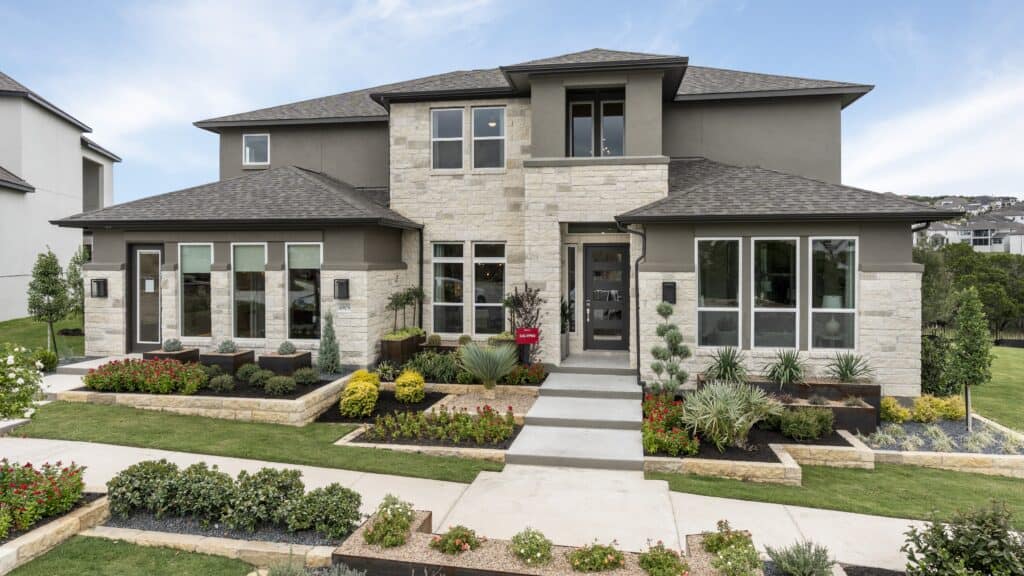
Find Your Future at Travisso
New construction homes can absolutely be a sound long-term investment—particularly when you choose a quality builder, a location with strong economic fundamentals, a community designed to attract and retain residents, and a floor plan that works for how your household actually lives.
The buyers who get the most from new construction are those who go in with clear priorities, ask the right questions, and take the time to understand not just the home but the community and market around it.
If you’re exploring new construction homes and wondering whether buying new is the right move, Travisso offers the perfect place to start. With thoughtfully designed homes, resort-style amenities, and a location in one of the fastest-growing areas near Austin, it’s easy to see why so many buyers are making the move to Travisso.